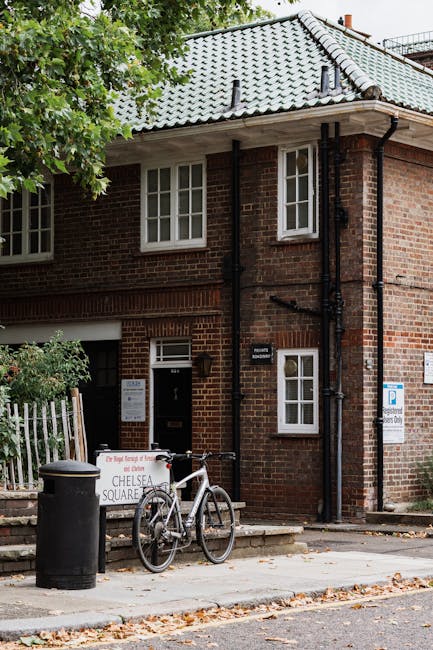
How to avoid hidden charges from Chelsea gardeners: a practical guide for homeowners and landlords
If you have ever agreed a garden tidy-up only to be hit with a surprise line on the invoice, you will know the feeling. It is annoying, a bit awkward, and frankly avoidable much of the time. This guide on How to avoid hidden charges from Chelsea gardeners explains what to look for before work starts, how to compare quotes properly, and how to spot the small print that can quietly nudge a fair price into an expensive one. The aim is simple: help you get a tidy garden, a clear quote, and no nasty surprises.
Chelsea gardens often come with their own quirks too. Narrow access, shared entrances, high-end planting, disposal issues, and one-off jobs can all affect the final cost. That does not mean you should expect hidden fees. It means you need to ask the right questions, in the right order, before anyone lifts a spade.
Table of Contents
- Why hidden charges from Chelsea gardeners matter
- How hidden charges usually appear
- Key benefits of clear pricing
- Who this advice is for
- Step-by-step guidance
- Expert tips for better results
- Common mistakes to avoid
- Tools, resources and recommendations
- Law, compliance, standards and best practice
- Options, methods and comparison table
- Case study or real-world example
- Practical checklist
- Conclusion
- Frequently asked questions
Why hidden charges from Chelsea gardeners matter
Hidden charges matter because they turn a simple purchase into a guessing game. A quote for lawn care, hedge cutting, pruning, clearance, or a full garden maintenance visit should give you a sensible expectation of what you will pay. If the price changes later without a clear reason, trust goes out of the window.
In practical terms, hidden charges can show up as call-out fees, waste disposal costs, minimum visit charges, extra labour for access issues, fuel surcharges, or vague "materials" costs. None of those are automatically wrong. The problem is when they are not explained upfront. That is the bit people feel most keenly. You planned for one figure, and then the bill arrives with a few surprises tucked into it. Not ideal.
For Chelsea residents, this matters even more because local properties can vary so much. A compact front garden in a terrace, a raised rear garden with restricted access, or a courtyard that needs bagging and manual removal will all affect how a gardener prices the work. The key is transparency, not assuming every job is simple, and not assuming every extra is a scam either. There is a middle ground, and that is where good gardeners operate.
If you want a company that treats pricing as part of the service, not an afterthought, it is worth reviewing a provider's pricing and quotes approach alongside its wider services overview. That gives you a better sense of what is included before you commit.
Expert summary: The safest way to avoid hidden charges is to insist on a written, itemised quote that spells out labour, materials, disposal, access assumptions, and any extras before work begins.
How hidden charges usually appear
Hidden charges rarely announce themselves as "hidden charges". They show up in softer language, or in details that were never discussed. That is what makes them slippery. A gardener might quote for "lawn mowing" but later add charges for edging, clippings removal, or trimming around obstacles. Another might quote for "garden clearance" but exclude the cost of green waste disposal. The work may still be done properly, but the final total may feel very different from the number you first heard.
Here are the most common ways pricing can drift:
- Unclear scope: The quote covers the obvious work but not the awkward bits.
- Waste removal not included: Garden waste may need bagging, loading, transport, and disposal.
- Minimum visit rules: Small jobs can still be charged at a minimum call-out rate.
- Access issues: Long carries, locked gates, parking limitations, or basement access can affect labour time.
- Materials: Soil, compost, mulch, plants, or replacement fittings may be extra.
- Weather delays or revisit charges: Sometimes a job is postponed and rearranged, which can become a cost issue if not agreed clearly.
Let's face it, most of these are understandable from the gardener's side. Time is time. Fuel is fuel. Waste has to go somewhere. But you should still know exactly what you are paying for. A fair price is one thing; an incomplete price is another.
The best gardeners usually explain their process clearly, including payment timing and safeguards. If you are comparing options, take a quick look at payment and security information as well, because the way payment is handled is often a clue to how organised and transparent the business is.
Key benefits of clear pricing
Clear pricing is not just about saving money, though that is the obvious upside. It also makes the whole arrangement easier on everyone. You know what is included. The gardener knows what is expected. No awkward back-and-forth at the gate. No "I thought that was part of the quote" moment. We have all heard stories like that, and nobody enjoys being the main character in one.
The main benefits are straightforward:
- Budget control: You can plan properly for regular maintenance or one-off work.
- Better comparisons: You can compare like for like, instead of apples and oranges.
- Less stress: A clear quote reduces doubt and last-minute disputes.
- Better service quality: Transparent businesses often communicate better in general.
- Stronger accountability: Written terms give both sides something to refer back to.
There is another benefit people overlook. Clear pricing often improves the actual gardening result. Why? Because the gardener can work to a defined brief. If they know in advance that hedge cuttings must be removed, or that a border needs hand weeding but not replanting, they can prepare properly and bring the right equipment.
That kind of clarity also supports broader trust. A company that publishes policies on terms and conditions, insurance and safety, and health and safety is usually signalling that it takes its responsibilities seriously. Not always, but usually. And in this area, "usually" matters.
Who this is for and when it makes sense
This advice is useful for almost anyone hiring a gardener in Chelsea, but some people benefit more than others. If you are booking a one-off tidy before guests arrive, a regular maintenance visit, or a more involved clearance job, hidden fees can creep in differently each time.
It is especially relevant if you are:
- a homeowner comparing several Chelsea gardeners
- a landlord arranging work between tenancies
- a tenant responsible for a small private garden
- a property manager handling a larger maintenance schedule
- someone commissioning seasonal work such as pruning or leaf clearance
It also makes sense when the garden is not straightforward. Maybe there is shared access. Maybe the waste must be carried through the house. Maybe the job includes mature shrubs, heavy clippings, or overgrown areas that hide what is really going on. In those cases, a vague quote is a bit of a red flag.
If you are still at the early research stage, browsing a provider's about us page can help you understand who you are dealing with and how they present themselves. That sounds basic, but it helps. A lot.
Step-by-step guidance
Here is the simplest way to avoid hidden charges without turning the whole thing into a legal seminar. It is mostly about asking the right questions early and getting the answer in writing.
1. Describe the job in plain language
Do not just say "garden tidy-up". Say what you want done: mowing, edging, hedge trimming, border weeding, leaf collection, pruning, jet washing, waste removal, or plant replacement. The more specific you are, the harder it is for scope creep to sneak in later.
2. Ask what is included
Ask directly: What is included in the price, and what is not? That one question does a lot of heavy lifting. If the answer sounds fuzzy, push for detail. If someone says "everything", that is not a quote, that is a shrug with a number attached.
3. Request an itemised quote
An itemised quote lets you see the breakdown. Labour, waste disposal, materials, travel, and any special extras should be visible. Even if the provider does not break down every penny, they should at least show the main components clearly.
4. Confirm assumptions about access and waste
Ask whether the quote assumes easy access, on-street parking, and ordinary green waste volume. If access is awkward or the waste is heavy, say so before the visit. Otherwise the price can shift later.
5. Agree the price trigger points
Find out what would cause the price to change. For example: extra bags of waste, more time than expected, severely overgrown areas, or the need for additional tools. A sensible gardener will explain these thresholds before starting.
6. Get everything in writing
Texts, emails, and formal quotes are all useful. Written records reduce misunderstandings. If there is ever a disagreement, it is much easier to resolve when both sides can point to the same message.
7. Check payment terms before work begins
Ask when payment is due, what payment methods are accepted, and whether a deposit is required for larger jobs. The details should be straightforward, not mysterious.
8. Review the finished job before paying the balance
Walk through the result while the gardener is still there, if possible. That is the moment to ask about anything that looks unfinished or differs from the agreed brief. A five-minute check can save a much longer email exchange later.
For service-specific pricing clarity, the page on pricing and quotes is a useful place to start, and if you need to make contact or ask a question before booking, use the company's contact page.
Expert tips for better results
After a while, you start to see the same patterns. The best way to avoid hidden charges is not to become suspicious of every gardener. It is to become methodical. Calm, clear, a bit boring maybe, but effective.
- Take a few photos before the quote: If the garden is overgrown or access is tricky, visual context helps reduce disputes.
- Measure large areas roughly: You do not need surveyor-level accuracy, just a decent idea of lawn size or hedge length.
- Separate one-off work from maintenance: A tidy-up after months of neglect is not the same as weekly lawn care.
- Ask about seasonal variables: Spring growth, autumn leaf fall, and wet ground can all affect time and effort.
- Check whether disposal is charged per bag, per load, or included: That detail alone can change the total a lot.
One small but useful habit is to repeat back the job in your own words before confirming. Something like, "So that includes mowing, edging, the front border, and removal of clippings, yes?" It sounds simple, because it is. Yet it works.
If you are dealing with a larger or more sensitive site, it can also help to look at the company's services overview first, so you can match the work you need to the right type of service rather than guessing.
Useful rule of thumb: The clearer the brief, the fewer pricing surprises. The fewer assumptions, the better the relationship. Simple, but true.
Common mistakes to avoid
Most hidden-charge problems start with a small assumption. Not a big dramatic failure. Just a tiny missed detail that grows legs later. Here are the mistakes people make most often.
- Choosing the cheapest quote without checking scope - low numbers can look brilliant until the exclusions appear.
- Assuming waste removal is always included - it often is not.
- Not asking about VAT or other taxes where applicable - if a business charges VAT, you should know whether the quote is inclusive.
- Failing to mention access problems - long carries and awkward parking can matter more than people think.
- Skipping written confirmation - verbal agreements fade fast once the job is done.
- Changing the brief mid-job without agreeing the price - a small extra request can become a real cost if it is not discussed first.
There is also a subtle one: people sometimes feel awkward asking "naff" questions about money. Don't. It is your garden and your budget. Respectful questions are normal. A professional gardener will not mind them.
Tools, resources and recommendations
You do not need fancy software to stay protected. A few basic tools are enough.
- Phone notes: Keep a running list of what was agreed during calls.
- Photos: Before and after images help with scope and quality checks.
- Messaging or email: Use written channels for the final quote and any changes.
- Simple comparison table: Compare inclusion, waste, access assumptions, and payment terms across providers.
- Folder for documents: Store quotes, invoices, and job notes together.
It can also help to review a provider's support pages before booking. For example, clear information on insurance and safety shows how they think about risk, while payment and security can tell you how they handle transactions. That is not just admin. It is part of the trust picture.
If your values include lower-waste garden work, the recycling and sustainability page may also be worth checking, especially where green waste disposal is involved. Waste handling can be one of the sneakiest sources of unexpected cost, so it helps when a business explains its approach clearly.
Law, compliance, standards and best practice
When you are dealing with any paid trade service in the UK, the safest assumption is this: clarity matters. A quote should not be misleading, and the work should be described honestly. You do not need to become a legal expert to protect yourself, but it helps to understand a few practical basics.
First, make sure the description of the work is accurate. If a provider says waste removal is included, it should be included. If the quote is an estimate rather than a fixed price, that should be explained clearly. If VAT may be added, ask early. Plainness is the goal.
Second, look for businesses that use sensible documentation. A clear set of terms and conditions helps set out expectations around cancellations, changes, and payment timing. A written complaints route is also a good sign because it gives you a path forward if something goes wrong. You can view that through the company's complaints procedure.
Third, if anyone is working on your property, safety should not be an afterthought. Tools, slopes, ladders, chemicals, and powered equipment all carry risk. A decent provider will have clear working practices and may publish its health and safety policy. That matters because a cheap job is not actually cheap if it creates avoidable problems.
Finally, responsible businesses usually explain who they are and how they operate. That kind of transparency supports trust. It is one reason pages like about us and the company's wider public information can be so helpful when you are comparing options.
Options, methods and comparison table
There are a few common ways gardeners price jobs. Each can work well, but each has trade-offs. Knowing the difference makes it easier to avoid hidden charges from the start.
| Pricing method | How it works | Best for | Watch out for |
|---|---|---|---|
| Fixed quote | A set price is agreed for a defined job | Clear, one-off work with a defined scope | Extras if the brief changes |
| Hourly rate | You pay for the time spent on site | Unpredictable or complex jobs | Total cost can rise if the job expands |
| Visit-based pricing | A standard charge per visit or maintenance round | Regular garden care | Tasks outside the usual visit may cost more |
| Estimate | A likely price that may change after inspection | Jobs where size or condition is uncertain | Needs clear rules for adjustments |
For most people, a fixed quote with written exclusions is the easiest to manage. If you are not sure whether a job is simple enough for a fixed price, ask the gardener to explain what could change the cost. That one conversation can save a lot of hassle later.
Case study or real-world example
Here is a realistic example. A Chelsea homeowner books a tidy-up for a small rear garden after several months away. The garden looks manageable at first glance: lawn, some borders, a hedge, and a patch of leaf litter. The initial quote sounds reasonable. But once the gardener sees the property, they note that access is through the house, the clippings must be bagged manually, and the hedge cuttings will need disposal off-site.
If none of that had been discussed, the final bill might have felt inflated. But if it had all been explained up front, the customer could have made an informed choice. Maybe they would still proceed. Maybe they would choose a different date, or trim some work from the brief. Either way, the surprise disappears.
That is the point. Avoiding hidden charges is not about squeezing every gardener for the lowest possible price. It is about making sure both sides understand the job properly before the mower starts up and the first bags of cuttings begin to pile up.
Practical checklist
Use this checklist before you confirm any gardening work:
- Have I described the job clearly and specifically?
- Have I asked what is included and excluded?
- Do I have a written quote or written confirmation?
- Is waste removal included, or priced separately?
- Have I mentioned access issues, parking, gates, or long carry distances?
- Do I know whether the price is fixed, estimated, or hourly?
- Have I checked whether materials or extra labour cost more?
- Do I understand payment timing and accepted payment methods?
- Have I looked at the provider's terms and conditions?
- Do I know who to contact if something goes wrong?
If you can tick most of those boxes, you are in a much stronger position than the average customer. Honestly, it is often the difference between a smooth booking and a slightly messy one.
For a quicker next step, you can review pricing guidance and then send a direct enquiry through the contact page. A few minutes of preparation can save you money and a fair bit of irritation.
Conclusion
Learning How to avoid hidden charges from Chelsea gardeners comes down to three things: clarity, written confirmation, and sensible questions before the job starts. When you describe the work properly, ask what is included, and agree any possible extras in advance, the whole experience becomes much easier to manage.
To be fair, a good gardener should welcome that level of detail. It shows you are organised, not difficult. And if a quote still feels vague after you have asked the right questions, that is useful information too.
In the end, the goal is not just to save money. It is to hire with confidence, protect your budget, and feel relaxed when the work is underway. That little bit of certainty goes a long way on a busy day, especially when the garden finally looks the way you wanted.
Get a free quote today and see how much you can save.
Frequently Asked Questions
What are the most common hidden charges from gardeners?
The most common ones are waste disposal, extra labour for difficult access, minimum call-out fees, materials, and work that falls outside the original scope. The key is to ask what is included before booking.
Should a gardener give me a written quote?
Yes, ideally. A written quote is much easier to follow than a verbal estimate. It helps both sides agree on scope, exclusions, and any possible extras.
Is waste removal usually included in garden quotes?
Sometimes, but not always. Green waste can add time, labour, and disposal costs. Always ask whether clippings, branches, soil, and bags are included.
How can I compare Chelsea gardeners fairly?
Compare the same things each time: scope, waste disposal, materials, access assumptions, timing, and payment terms. A cheaper quote is not really cheaper if it excludes half the job.
What should I ask before accepting a gardening quote?
Ask what is included, what is excluded, whether the price is fixed or estimated, whether waste removal is covered, and whether access or parking issues could change the price.
Can a gardener charge more if my garden is overgrown?
Yes, if that extra work was not already priced in. Overgrown areas often take more time and disposal effort, so it is sensible for the gardener to explain that before starting.
How do I know if a price is suspiciously low?
If the price is much lower than others and the quote is vague, that is a warning sign. It may mean exclusions, shortcuts, or extra charges later. Ask for a clearer breakdown.
What if the gardener changes the price after arriving?
Ask why the price has changed and whether the new cost matches the agreed scope. If the job is materially different from what was described, a change may be reasonable, but it should be explained clearly first.
Are deposits normal for garden work?
For larger jobs or material-heavy work, a deposit can be normal. For small routine visits, it may not be necessary. The important thing is that the payment terms are explained upfront.
Do terms and conditions help avoid hidden charges?
Yes. Good terms and conditions should explain pricing, payment timing, cancellations, and how extra work is handled. They are one of the best tools for avoiding misunderstandings.
What is the safest way to book a gardener in Chelsea?
Use a provider that explains pricing clearly, gives written confirmation, and has transparent information about insurance, safety, and complaints. That combination usually points to a more reliable service.
Who should I contact if I am unsure about a quote?
Ask the provider directly and request clarification in writing. If you need more detail before booking, the company's contact page is the right place to start.